Neuigkeiten rund ums Einlagern
Mold in the basement – a problem
Many of us have already heard about it, maybe you have had problems with it yourself – mold. But what is mold anyway? Where and under what conditions does mold develop? And how to avoid the problem of mold?
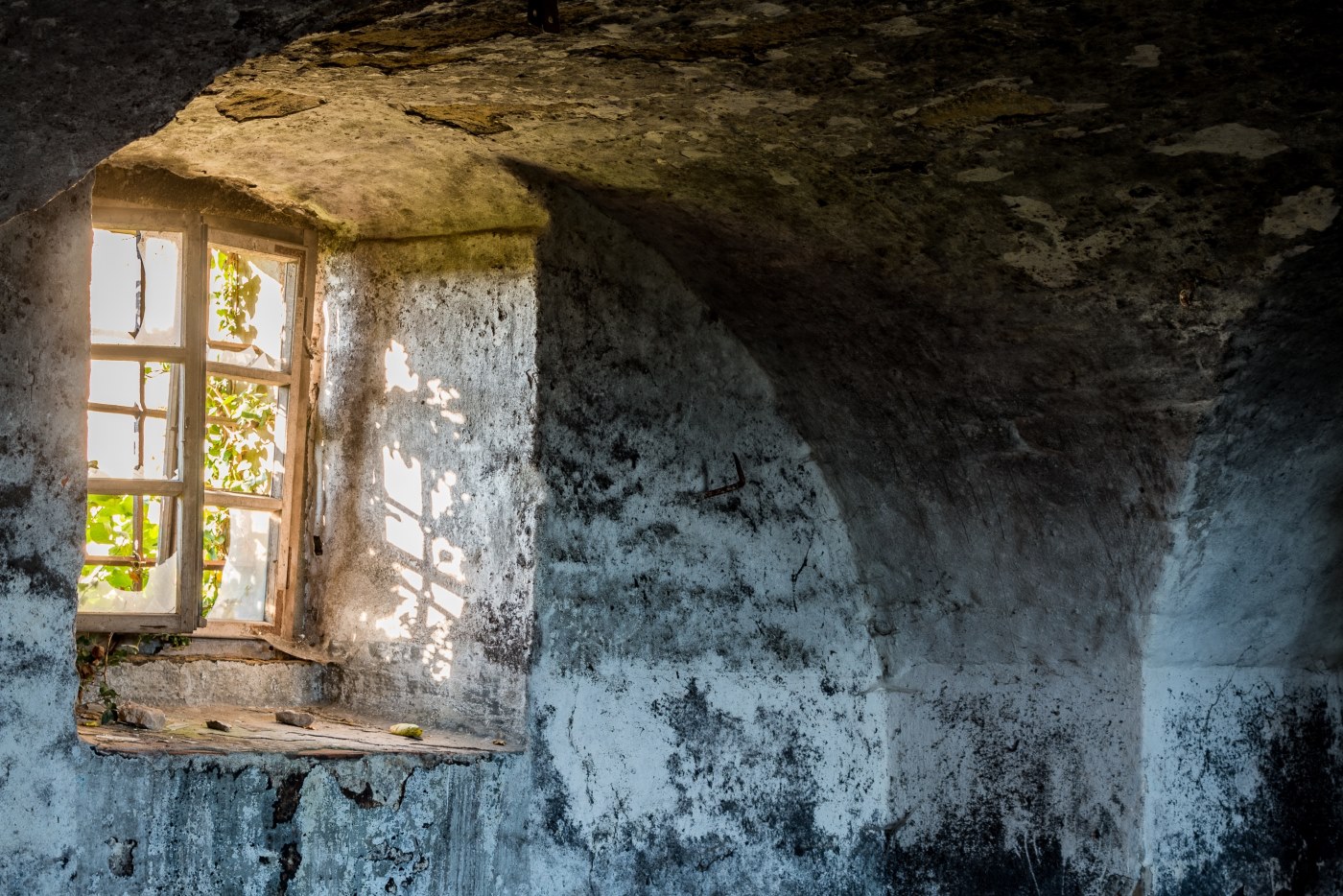
Mold, more precisely called mold fungus, belongs to the filamentous fungi. There is an almost infinite number of different fungi. These can be used for different uses, not least for the processing of food. However, we are only talking about the molds found in buildings. These are inedible for humans and can cause damage to health. But where does mold originate in the building and what conditions does it need to spread?
There are traces of mold in almost every building. Mold spreads through mold spores. However, the extent to which it spreads and thus how severely it can negatively affect our health depends primarily on the following conditions in buildings:
Factors influencing mold formation
Humidity: the more humid the air in the room, the more likely it is to contribute to mold growth
Temperature: Temperature changes affect the ability of water to be stored in the air
Combination of humidity and temperature: the combination of the two factors humidity and temperature is mainly responsible for the formation and growth of mold in the building. One speaks of «relative humidity». From a relative humidity of 70%, the first mold spores form, from a relative humidity of 80% mold will definitely form.
The moisture typically increases when cooking or showering. Natural human perspiration should not be underestimated, however. You usually know this from the car: if you sit in the car sweaty after a 10km run, the windows suddenly start to tarnish – a sign that the body is releasing moisture into the car interior air and the relative humidity is thus increasing significantly. The increased temperature then hits the still cold car windows, causing them to tarnish.
This is where temperature comes into play. For mold to form, not only moisture is needed, but also temperature. The basic principle is: the higher the temperature of the air, the more moisture it can store. So if relatively warm air with a high moisture content meets cool temperatures, the cool air quickly can no longer store the moisture and releases it again. The increased humidity favors the spread of mold spores. Or another example: you leave the windows open in winter because you can sleep better that way. Cold, damp air enters the bedroom throughout the night. The moisture will settle everywhere, including on the walls. The walls then retain some of the moisture, which promotes the formation of mold. If you heated the room at night, the moisture would be immediately absorbed by the warm air. However, since our heating runs at a reduced temperature overnight, the moisture cannot be absorbed.
In the apartment or in the house, or rather: in all rooms that are above ground and have an opening to the outside, usually in the form of a window, the issue of relative humidity can be easily brought under control.
Adequate ventilation during the day lowers the relative humidity of the indoor temperature and kills the mould, so to speak. This is because the outside air has an increased humidity level overnight, which drops again during the day due to the interaction of humidity and temperature. The subject of relative humidity is therefore always present in our nature: at night, the relative humidity is rarely less than 80%. This is because the temperature automatically drops due to the lack of sunlight at night. And as mentioned earlier, cold air can hold less moisture than warm air. So it releases the moisture, the relative humidity increases. However, as soon as the first rays of the sun hit the earth, the air warms up. Warm air can store more moisture and thus the relative humidity decreases. Now it’s time to ventilate: the warm, less humid air enters the room and mixes with the relatively humid indoor air – the relative humidity in the interior begins to drop and the breeding ground for mold is removed.
Basement compartments
How does the whole interplay of moisture and temperature in the basement compartment and in underground rooms look like? Two main problems come into play in the subterranean space: on the one hand, the temperatures in the subterranean area are naturally lower in summer and higher in winter than in the area above ground. In summer, this is due to the fact that the sun’s rays are only able to penetrate the earth to a limited extent. The surface of the earth and the overlying layer of air is heated, but not the subterranean spaces. In winter, the cold air cools the earth’s surface due to the flat angle of the sun’s rays, but only to a certain depth. Everything that remains underneath – i.e. the basement compartment – is cooled less.
As mentioned earlier, there are two main causes of mold growth in buildings: temperature and humidity. And in the basement we are naturally talking about different temperatures than in the area above ground – the first main cause of mold growth in buildings is therefore already “irritated”. But how does moisture come into play in the basement compartment?
We all have most likely heard of groundwater. There is always groundwater at a certain depth under our feet. Groundwater belongs to our planet like seawater. And groundwater rises and falls all the time. So it can happen very quickly at certain times of the weather that the groundwater rises to the level of the basement. Of course, this does not mean that water is entering the basement. Today’s construction makes it possible for us to seal the basement well against the ground. However, this is not the case for all buildings – especially with old building fabric (and most Swiss buildings have an old building fabric) the sealing does not always work perfectly. This is how water penetrates the underground walls. You don’t have to see the water yet, it’s enough if the wall gets damp on the inside.
Or another, often misunderstood reason for the formation of mold in the basement area: airing in the summer. You mean well, you just have to ventilate, then mold doesn’t stand a chance. And that’s how it’s described above!? Yes, but that only applies to above ground rooms. If you ventilate during the day in summer when temperatures are warm, there is a risk that warm air, which can store more moisture than cold air, will penetrate into the basement. In the basement, however, the temperature is naturally cooler, the walls are even a little lower in temperature. The warm air cools down, brushes against the cold walls and automatically loses some of the stored moisture – because it is well known that cold air can store less moisture than warm air. This is how mold suddenly develops in the basement, although you actually wanted to do it right. But the laws of nature cannot be tricked.
In summary, one can say that the formation of mold in the underground area is almost unavoidable. A building cannot be so airtight that no warm outside air can penetrate into the basement in summer. You have to open a door from time to time to get into the basement compartment – and then the exchange between the different air temperatures takes place. And the issue of groundwater cannot and should not be avoided. Water always finds its way, they say, and that’s true. Water has patience. But at some point the wall is penetrated by water through a small crack in the outer skin. Think of a minor earthquake: no wall can withstand cracking from earth movement. And no matter how small the crack: the water will find its way.
Solutions to prevent mold growth
What does this mean for the storage of your valuable things in the basement / underground area? The most expensive but effective solution is to install a dehumidifier. If the moisture is always drawn out of the air, mold cannot form and your furniture is protected. However, the costs of operating a dehumidifier are usually disproportionately high.
A cheaper, usually just as effective, alternative is to store your furniture, household effects or beloved property in a self-storage facility. Today there are more and more providers of self-storage warehouses throughout Switzerland. Such as my Mein Lager Self Storage in Rüthi SG in the Rhine Valley. Here you can “outsource” your cellar and, for a monthly fee, rent a storage room that only you have daily access to. You store your furniture at Mein Lager Self Storage above ground and no longer underground in a basement compartment, which minimizes the risk of mold growth.
 zurück zur Übersicht
Kategorien:
Ähnliche Beiträge
Live generously in less than 40 square meters of living space
Not least because of the steadily rising property prices and the high construction costs incurred for owning a home, many people…
weiterlesen
It’s time to throw away the old
For many of us, tidying up, mucking out and disposing of waste is an unpleasant topic, because nobody likes doing it. But…
weiterlesen